
Around 750,000 people across the UK are living with obsessive compulsive disorder (OCD) right now. That’s roughly 1.2% of the population, and about half of those cases are considered severe. Yet most people wait years before getting proper help. If you’re reading this from Hampstead, Belsize Park, Highgate or anywhere in North West London, you don’t have to keep waiting.
OCD is not a personality quirk. It’s not about being tidy or organised. It’s a condition that traps you in cycles of unwanted thoughts and compulsive behaviours that consume hours of your day and drain your energy. The good news? It responds well to the right kind of therapy. And that’s exactly what we offer at Mandi Simons Counselling and Psychotherapy.
This page explains what OCD actually looks like, how therapy works, and why getting private specialist support in Hampstead could be the turning point you’ve been looking for.
OCD involves two main components. The first is obsessions, which are intrusive, unwanted thoughts, images or urges that cause significant distress. The second is compulsions, which are repetitive behaviours or mental rituals you feel driven to carry out in response to those obsessions.
Some of the most common obsessions include fears around contamination, fears of causing harm to yourself or others, intrusive sexual or violent thoughts, and a need for symmetry or exactness. Compulsions often involve repeated checking, excessive cleaning, counting, arranging objects in a specific order, or seeking reassurance from others.
One of the biggest barriers to people getting help is the widespread misunderstanding of what OCD actually is. Social media and casual conversation have turned “I’m so OCD” into a throwaway phrase about liking clean surfaces. The reality is completely different.
OCD can make it difficult to leave the house, hold down a job, maintain relationships, or get through the most basic daily tasks. The charity OCD UK reports that this condition affects people from all backgrounds, all age groups and all walks of life. It doesn’t discriminate.
If your intrusive thoughts take up more than an hour a day, cause you significant distress, or stop you doing things you want to do, that’s OCD. And it deserves proper treatment.
The treatment recommended by the National Institute for Health and Care Excellence (NICE) for OCD is talking therapy, most commonly Cognitive Behavioural Therapy (CBT). At our Hampstead practice, we go further than a single modality. Our therapists draw on a range of evidence based approaches, including integrative psychotherapy and person centred counselling, to find what works best for you.
CBT helps you understand the relationship between your thoughts, feelings and behaviours. You learn to recognise the patterns that keep OCD going and develop practical ways to challenge them.
But OCD is rarely just about thought patterns. It’s often rooted in deeper emotional experiences, past trauma, anxiety, or relationship difficulties. That’s why our therapists take a broader view, working with you to understand not just the OCD cycle but what’s driving it underneath. This means therapy is more personalised and often more effective in the long run.
It’s structured, it’s collaborative, and it moves at your pace. Nobody rushes you. Your therapist works with you to set goals that feel meaningful and achievable.
It’s worth knowing that not all therapy is suitable for OCD. Some approaches that focus heavily on exploring the meaning behind your thoughts can actually make symptoms worse. Mind, the mental health charity, specifically advises checking that any therapist you see has experience treating OCD with evidence based methods.
At our Hampstead practice, our therapists are trained in the approaches that work. We match you with a therapist whose skills and experience fit your specific situation.

The NHS does offer treatment for OCD, and the standard of care can be good when you reach the front of the queue. The problem is getting there.
According to Rethink Mental Illness, over 16,500 people were still waiting for mental health treatment after 18 months in the most recent data published. The NHS target says 75% of talking therapy patients should be seen within six weeks. Many areas struggle to meet that target, and the wait for specialist OCD treatment can be even longer.
OCD tends to get worse when it goes untreated. Waiting months or years for therapy means your symptoms have more time to become deeply embedded. The sooner you start, the better the outcome.
Choosing a private OCD therapist means you can start quickly, often within days. Sessions are scheduled around your life, not around a system under pressure. You get consistent one to one support with the same therapist throughout. And you’re not limited to a fixed number of sessions decided by a commissioning budget.
At Mandi Simons Counselling and Psychotherapy, we offer a free 30 minute consultation so you can talk through your situation before committing to anything. There’s no obligation and no pressure. You can book that consultation here or get in touch via WhatsApp on 07938 612004.
Walking into a therapy room for the first time when you’re dealing with OCD can feel daunting. Many people worry about being judged for their intrusive thoughts. So it’s important to say this clearly: your therapist has heard it all before, and nothing you share will shock them.
Your therapist will spend time understanding how OCD shows up in your life. They’ll ask about the specific obsessions and compulsions you experience, how much time they take up, and how they affect your daily functioning. This isn’t about putting a label on you. It’s about building a clear picture so therapy can be targeted and effective.
Together, you’ll create a plan that addresses your specific OCD patterns. This includes identifying your triggers, understanding the compulsive behaviours that follow, and agreeing on the therapeutic approach that fits your needs. Your therapist is alongside you every step of the way.
If you’re not sure how to choose the right therapist, our team can help you find the best fit from our BACP registered practitioners.
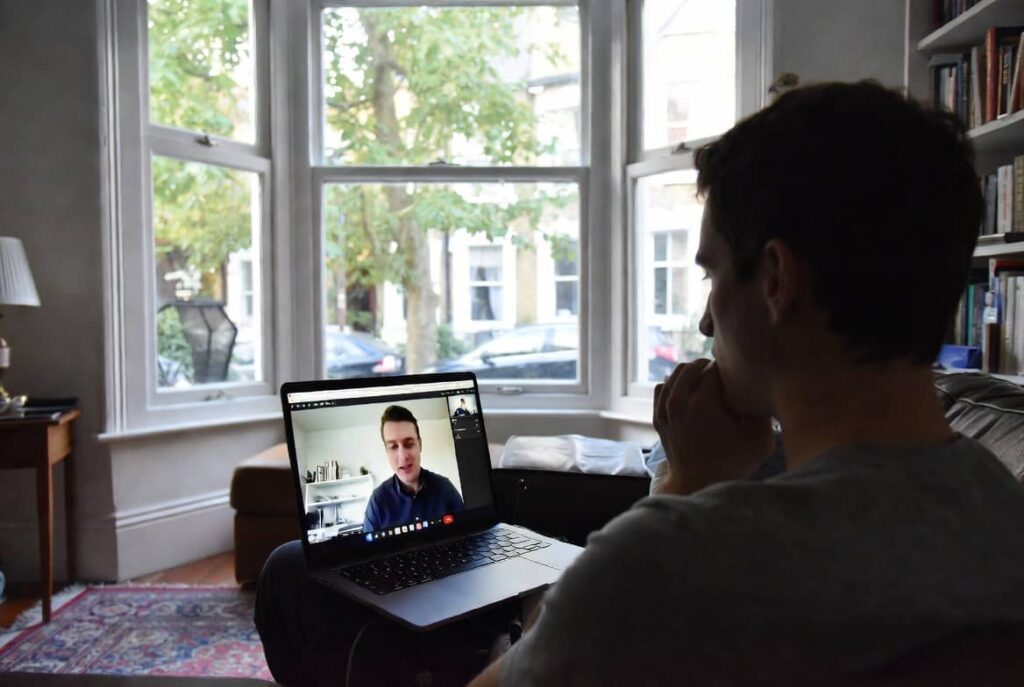
Yes. Online OCD therapy is just as effective as face to face therapy for most people. Research consistently shows that structured talking therapy delivered over video call produces the same outcomes as in person sessions.
This is particularly useful if you live further out in North London (Muswell Hill, Crouch End, East Finchley) and would rather not travel, or if your OCD makes leaving the house difficult. We offer online sessions alongside our in person appointments at our Hampstead consulting rooms.
Whether you come to our rooms on Hampstead High Street or Heath Street, or you connect from your own home, the quality of therapy is the same.
OCD can start in childhood, and research suggests the condition often becomes problematic during late adolescence. The NICE guidelines recommend that children and young people with moderate to severe OCD receive therapy adapted to their developmental age, with family involvement. Our practice has therapists experienced in working with younger clients and their families.
OCD in the workplace is more common than most people realise. The societal cost of OCD in the UK is estimated at billions of pounds annually, much of it driven by lost productivity and reduced performance at work. If you’re struggling to keep up at work because of OCD rituals or intrusive thoughts, private therapy offers the flexibility to schedule sessions outside working hours.
We also offer workplace counselling services for businesses looking to support their employees’ mental health.
OCD affects men and women in roughly equal numbers, but men are far less likely to seek help. Our practice includes experienced male therapists who understand the specific barriers men face when it comes to talking about their mental health.
Most people begin to notice a reduction in symptoms within 8 to 12 sessions of structured therapy. The NHS recommends at least 10 therapist hours for OCD treatment. More severe cases may need longer, and your therapist will review progress with you regularly to make sure the approach is working.
Many people recover to the point where OCD no longer controls their daily life. For some, symptoms reduce to a manageable level. The goal of therapy is not perfection but freedom. You learn to respond differently to intrusive thoughts so they lose their power over your behaviour and your choices.
A general counsellor provides valuable support for many issues, but OCD responds best to therapists who understand the condition and know how to work with it. An OCD specialist is a therapist trained in structured approaches and experienced in treating obsessive compulsive patterns. At our practice, you’ll work with BACP registered therapists who know how to treat OCD effectively. You can learn more about the difference between counselling and psychotherapy on our website.
Session fees vary depending on the therapist and the length of the session. We keep our pricing transparent and competitive. You can find full details on our fees page. We also offer a free 30 minute initial consultation so you can explore your options without any financial commitment.
Yes. The NICE guidelines recommend combined treatment with an SSRI and talking therapy for severe OCD. If you’re already taking medication, therapy can work alongside it. If you’re considering medication, your therapist can discuss this with you and recommend speaking with your GP. Therapy and medication often work best together.
We can arrange more frequent sessions for clients who want or need a more intensive OCD treatment approach. Rather than weekly appointments, some people benefit from two or three sessions per week during the initial phase of therapy. We’ll discuss the best format for you during your free consultation.
OCD thrives on avoidance. It tells you that now isn’t the right time, that it’s not that bad, that you should wait and see. Recognising that voice for what it is takes courage, and reaching out for support takes even more.
At Mandi Simons Counselling and Psychotherapy, our BACP registered therapists provide professional OCD help in London from our three Hampstead consulting rooms, serving clients across North West London including West Hampstead, Belsize Park, Golders Green, Highgate, Muswell Hill, Crouch End and East Finchley.
You can book a free 30 minute consultation to talk things through, or message us on WhatsApp at 07938 612004. You can also read more about what to expect in your first therapy session if you’d like to know more before getting in touch.
You don’t have to keep living around OCD. The right support is closer than you think.